Coachella, CA & Riverside County
Fire Extinguisher Residue Cleanup in Coachella
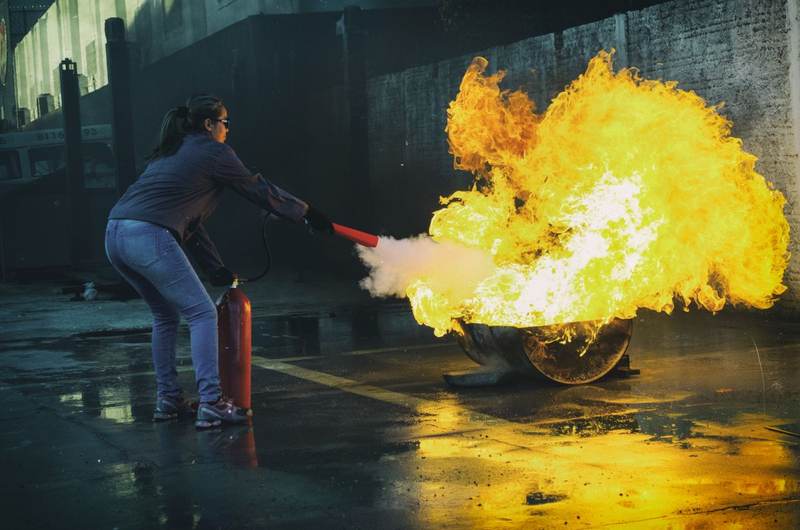
The extinguisher put the fire out, and the powder went everywhere — on the floor, on the walls, in the air, and into the electronics. The powder is corrosive, and it needs to be cleaned properly, not swept.
The extinguisher put the fire out, and the powder went everywhere — on the floor, on the walls, in the air, and into the electronics. The powder is corrosive, and it needs to be cleaned properly, not swept, because sweeping spreads it into the air and drives it deeper into the surfaces. This post explains what the powder is, what it damages, and how the provider cleans it without spreading it further.
The second thing to understand is that the residue is not soot, and it is not dust. It is a dry chemical powder, and it is designed to smother a fire — and it does the same thing to electronics, to metal, and to paint, if it is left sitting. The longer it sits, the more it corrodes, and the harder it is to remove. The provider cleans it with a HEPA vacuum and a damp cloth, not with a broom, and the cleaning starts with the dry pass, not with water.
What the Powder Is
The powder is a dry chemical, and it is designed to smother a fire by cutting off the oxygen and by interrupting the chemical reaction that keeps the fire burning. The most common powder is monoammonium phosphate, and it is a fine, pale powder that goes everywhere the extinguisher was pointed — and further, because the discharge is forceful and the powder drifts on the air.
The powder is corrosive. It eats into metal, it corrodes circuits, and it damages paint and plaster if it is left sitting. It is not toxic in the way soot is, but it is irritating to the lungs, the eyes and the skin, and it should not be breathed in. The provider works in protective equipment, and the room should stay closed until the powder is cleaned.
The powder is also fine, and that is what makes it hard to clean. The particles are small enough to get into electronics, into fabrics, into the ducts, and into the cracks in the floor. A broom spreads them, a household vacuum passes them through, and water turns them into a paste that sets as a stain. The provider uses a HEPA vacuum, which traps the fine particles, and a damp cloth, which lifts them without spreading them.
What It Damages
The powder damages electronics first, because it is corrosive to circuits and because it gets into the smallest gaps. A device that looks fine can fail weeks later, so each electronic item is assessed one by one. Some can be cleaned and kept, some must be replaced, and the provider will tell you which is which before any work starts. Do not switch on an electronic device that was covered in powder.
The powder damages metal next. It corrodes the hinges, the fixtures, the wiring, and the appliances, and the corrosion is what makes the damage worse over time, not just on the day. A surface that is cleaned on the first day can often be kept, and a surface that is left for a week may need replacing. The provider will tell you what the powder did, and what still needs to be done.
The powder damages fabrics and upholstery, because it gets into the fibres and it is hard to remove once it has settled. A sofa that looks clean can still carry the powder in its fabric, a curtain can carry it in its fibres, and a book can carry it in its pages. The provider tests the contents the same way the surfaces are tested, and the treatment is decided item by item.
How the Provider Cleans It
The provider starts with the dry pass: a HEPA vacuum, which pulls the fine particles out of the air and off the surface, and a dry cloth, which lifts the powder without driving it in. The vacuuming is done slowly, and the room is checked against the reference again. The dry pass is the most important part of the job, because it is the part that stops the powder from setting as a stain.
The wet pass follows the dry pass, and only after the dry pass is done. A damp cloth is used to lift what the dry pass left behind, and then the rinsing, and the room is checked against the reference again. The cloth is damp, not wet, because water turns the powder into a paste that sets as a stain. The provider will tell you what the wet pass found, and what still needs to be done, before the next step starts.
The provider cleans the electronics separately, with a dry cloth and a HEPA vacuum, and each device is assessed one by one. Some can be cleaned and kept, some must be replaced, and the provider will tell you which is which before any work starts. Do not switch on an electronic device that was covered in powder, and do not use it until the provider has checked it.
What Not to Do
Do not sweep the powder. Sweeping spreads it into the air and drives it deeper into the surfaces, and the fine particles will be breathed in. Do not dust it, and do not run a household vacuum over it, because a household vacuum has no HEPA filter, and the fine particles pass straight through it and back into the room. The provider's HEPA vacuum traps the particles.
Do not wipe the powder with a wet cloth, because water turns it into a paste that sets as a stain. Do not use a household cleaner, because the cleaner does not lift the powder and it drives it deeper into the surface. Do not switch on an electronic device that was covered in powder, because the powder is corrosive to circuits and a device that looks fine can fail weeks later.
Do not clean what you have not photographed. Photograph every room, every surface, and every item, before anything is moved or cleaned, because the photographs are the record your insurer will read. A room that is cleaned before it is photographed is a room the claim cannot see, and a room the claim cannot see is a room the claim cannot pay for.
When the Room Is Safe Again
The room is safe again when the dry pass is done, the wet pass is done, and the readings are normal. The provider will tell you when the room is safe, and will show you what was cleaned, because the record is what the claim is built on. The provider will not say the room is safe before the cleaning is done, and will not switch the power back on before the wiring has been checked.
The room is safe again when the smell is gone. The powder does not carry the same smell as soot, but the fire that the extinguisher put out does, and the smell lingers in walls, ceilings and ducts long after the fire is out. The provider treats the source, not the smell, and the source is the soot in the walls, the ceilings, the ducts and the fabrics. The smell is the last thing to go.
The room is safe again when the record is complete. The provider's record — the photographs, the inventory, the readings — goes into the claim file, and the record is what the claim is built on. The provider will give you copies of everything, so the file is complete, and the claim is decided on the file.
Fire Extinguisher Residue Cleanup, in Order
- Photograph first — Photograph every room and every surface before anything is moved or cleaned.
- Dry pass — A HEPA vacuum and a dry cloth lift the powder without driving it into the surface.
- Wet pass — A damp cloth follows the dry pass, and the room is checked against the reference again.
- Check the electronics — Each electronic device is assessed one by one, and the provider says which can be kept and which must be replaced.
- Check the smell — The smell is the last thing to go, and it is the thing that tells you whether the job is done.
Mistakes That Spread Extinguisher Residue
- Sweeping the powder, which spreads fine particles into the air
- Running a household vacuum over it, which has no HEPA filter
- Wiping it with a wet cloth, which turns it into a paste that sets as a stain
- Switching on an electronic device that was covered in powder
- Cleaning before photographing the damage
For help with this in Coachella, see Smoke & Soot Cleanup in Coachella — or go back to the Coachella fire damage restoration home page.
Frequently Asked Questions
What is fire extinguisher residue?
A dry chemical powder, usually monoammonium phosphate, that is designed to smother a fire. It is fine, pale, corrosive, and it goes everywhere the extinguisher was pointed.
Is the powder dangerous?
It is corrosive to metal and circuits, and irritating to the lungs, eyes and skin. The room should stay closed until the powder is cleaned, and the provider works in protective equipment.
Can I sweep it up?
No. Sweeping spreads the fine particles into the air and drives them deeper into the surfaces. The provider uses a HEPA vacuum and a dry cloth.
What about my electronics?
Do not switch them on. The powder is corrosive to circuits, and a device that looks fine can fail weeks later. Each device is assessed one by one.