Coachella, CA & Riverside County
Kitchen Fire Damage: What to Do in Coachella
Most house fires start in the kitchen, and the kitchen is where the soot, the smoke and the grease meet. The first step is to get out and call 911 — and the second is to leave the cleaning to the provider.
Most house fires start in the kitchen, and the kitchen is where the soot, the smoke and the grease meet. The first step is to get out and call 911 — and the second is to leave the cleaning to the provider, because the soot is acidic, the grease is flammable, and the surfaces are the hardest in the house to clean. This post explains what to do first, what never to wipe, and how the provider cleans a kitchen after a fire.
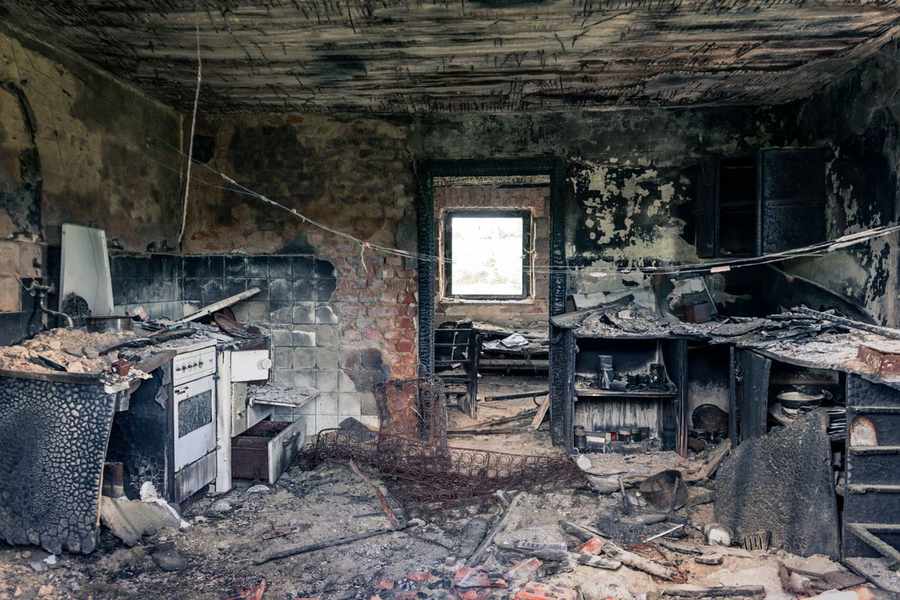
The second thing to understand is that a kitchen fire is not just a fire in a room. It is a fire in the room with the most surfaces, the most appliances, and the most food — and each of those is affected differently. The cabinets absorb soot, the appliances corrode, the food is ruined, and the smoke travels through the whole house. The provider maps the kitchen the same way the rest of the house is mapped, and the cleaning follows the map.
What to Do First
Get everyone out and call 911 from outside. Do not stop for belongings, for pets, for paperwork, for anything. A kitchen fire moves fast — the grease, the oil, the heat — and the smoke fills the rooms long before the flames reach you. Call 911 from outside the house, from a neighbour's phone if yours is inside, and stay outside until the fire officials say it is safe to go back in.
Once the fire is out and the officials say it is safe to enter, photograph the kitchen before anything is moved or cleaned. Photograph every cabinet, every appliance, every surface, and photograph the rooms that look untouched too, because smoke travels further than flames. Take video as well as photographs, and narrate as you go — which room it is, what you are seeing, what the fire touched.
Call (561) 566-7293 and describe the kitchen fire — what started it, how far the smoke went, whether the fire is fully out, and what now looks wet, blackened or scorched. The provider will tell you whether the job needs a visit, and what the visit will cover, before any work starts. The provider will not quote a price over the phone, because a price without a walk-through would be a guess.
What Never to Wipe
Never wipe soot with water. Never wipe it with a household cleaner. Never sweep it, never dust it, and never run a household vacuum over it. Each of those spreads the soot, drives it into the surface, and makes it harder to remove. A cabinet that is wiped before the dry pass is a cabinet that will need replacing, and a cabinet that is dry-passed first can often be cleaned and kept.
Never use an appliance that was in the fire. Soot is corrosive to circuits, and a device that looks fine can fail weeks later. Do not switch the power back on, do not turn on the air conditioning, and do not use the stove, the oven, the microwave or the refrigerator until the provider has checked them. Do not eat food that was exposed to smoke or firefighting water, and do not drink from taps until the water supply has been checked.
Never clean what you have not photographed. Photograph every cabinet, every appliance, and every surface, before anything is moved or cleaned, because the photographs are the record your insurer will read. A kitchen that is cleaned before it is photographed is a kitchen the claim cannot see, and a kitchen the claim cannot see is a kitchen the claim cannot pay for.
How the Provider Cleans a Kitchen
The provider starts with the dry pass: dry-chemical sponges and HEPA vacuuming, which lift the soot without driving it into the surface. The cabinets, the walls, the ceiling — each is dry-passed first, and each is checked against the reference again. The dry pass is slow, and it is the most important part of the job, because it is the part that stops the soot from setting as a stain.
The wet pass follows the dry pass, and only after the dry pass is done. A detergent and water are used to lift what the dry pass left behind, and then the rinsing, and the room is checked against the reference again. The grease is the hardest part of a kitchen fire, because it is flammable and it holds the soot, and the provider uses a degreaser that is chosen for the soot, not a household cleaner.
The appliances are assessed one by one. Some can be cleaned and kept, some must be replaced, and the provider will tell you which is which before any work starts. The inventory lists every appliance, every cabinet, and every item in the kitchen, and the list goes into the claim file. What can be cleaned is cleaned, what must be replaced is replaced, and the record is what the claim is built on.
The Grease Problem
The grease is the hardest part of a kitchen fire, because it is flammable and it holds the soot. A kitchen fire that starts in grease leaves a soot that is oilier, stickier and harder to remove than the soot from a wood fire, and the provider tests the soot before deciding how to clean it. The test is what decides whether the surface can be cleaned or must be replaced.
The grease also spreads the fire. A grease fire that is not put out in seconds will spread to the cabinets, the walls and the ceiling, and the smoke will travel through the whole house. Do not try to put out a grease fire with water — water spreads grease, and the fire will follow it. A lid, a baking sheet, or a fire extinguisher is what puts out a grease fire, and only if it is small enough to put out in seconds.
The grease leaves a film on everything it touches, and the film holds the soot and the smell. The provider cleans the grease with a degreaser that is chosen for the soot, and the treatment seals the surface so the smell cannot come back. The smell is the last thing to go, and it is the thing that tells you whether the job is done.
When the Kitchen Is Safe Again
The kitchen is safe again when the dry pass is done, the wet pass is done, the readings are normal, and the appliances have been checked. The provider will tell you when the kitchen is safe, and will show you the readings, because the readings are the record and the record is what the claim is built on. The provider will not say the kitchen is safe before the readings are normal.
The kitchen is safe again when the contents come back, and the contents come back last. What can be cleaned is returned, what must be replaced is replaced, and the inventory is checked against the list that was made on the first visit. The provider will walk the property with you at the end, room by room, and the job is not finished until you have seen it and the readings say the moisture is normal.
The kitchen is safe again when the smell is gone. The soot carries the smell, and the smell lingers in cabinets, walls and ducts long after the soot is gone, and the smell is the last thing to go. The provider treats the source, not the smell, and the source is the soot in the cabinets, the walls and the ducts. The smell is the thing that tells you whether the job is done.
Kitchen Fire Damage, in Order
- Get out and call 911 — Everyone out, pets included. Call from outside and stay out until fire officials say it is safe.
- Photograph the kitchen — Photograph every cabinet, appliance and surface before anything is moved or cleaned.
- Call the provider — Call (561) 566-7293 and describe the kitchen fire — what started it, how far the smoke went.
- Dry pass, then wet pass — The dry pass lifts the soot, the wet pass follows, and the grease is cleaned with a degreaser.
- Check the appliances — Each appliance is assessed one by one, and the inventory says which can be kept and which must be replaced.
Mistakes That Make a Kitchen Fire Worse
- Trying to put out a grease fire with water, which spreads the grease and the fire
- Wiping soot with water or a household cleaner
- Using an appliance that was in the fire before it is checked
- Eating food that was exposed to smoke or firefighting water
- Cleaning before photographing the kitchen
For help with this in Coachella, see Kitchen Fire Damage Restoration in Coachella — or go back to the Coachella fire damage restoration home page.
Frequently Asked Questions
What should I do first after a kitchen fire?
Get everyone out and call 911 from outside. Stay out until fire officials say it is safe. Then photograph the kitchen before anything is moved, and call (561) 566-7293.
Can I use my appliances after a kitchen fire?
No, not until the provider has checked them. Soot is corrosive to circuits, and a device that looks fine can fail weeks later.
Should I throw away food that was in the kitchen?
Yes, if it was exposed to smoke or firefighting water. Do not eat it, and photograph it first for the claim.
How is a kitchen cleaned after a fire?
The dry pass lifts the soot, the wet pass follows, and the grease is cleaned with a degreaser chosen for the soot.